
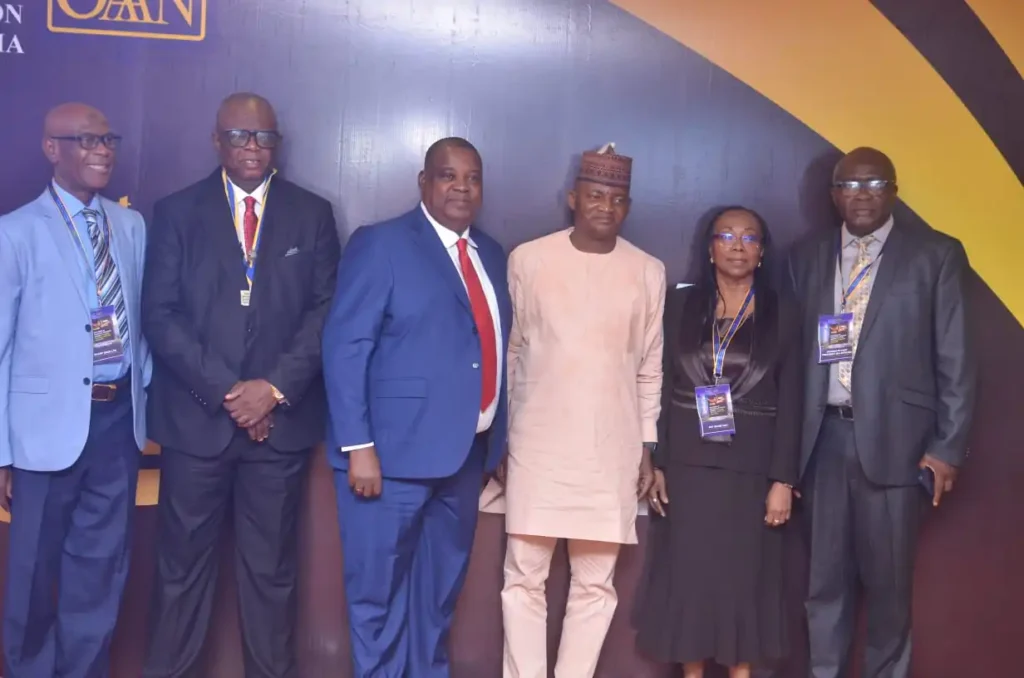
As Nigeria edges towards another election cycle, the Out-of-Home Advertising Association of Nigeria (OAAN) has called for greater fairness, regulatory consistency and political neutrality in the use of billboards and other out of home media formats, warning that selective enforcement and politically influenced regulation could undermine both the advertising industry and the democratic process.
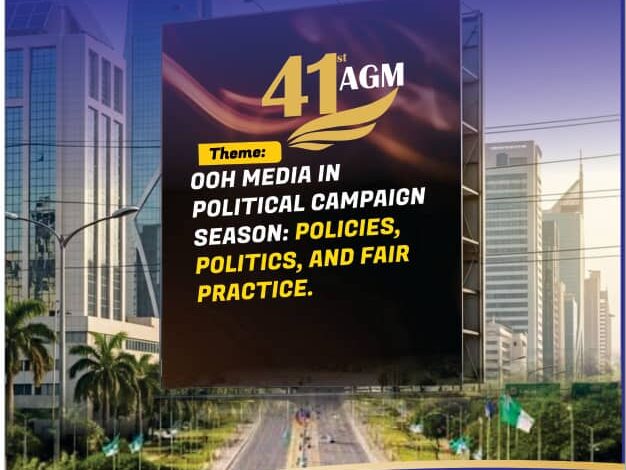
The call formed the centrepiece of discussions at OAAN’s 41st Annual General Meeting in Abeokuta, Ogun State, on Friday, where the association’s President, Dr. Sola Akinsiku, frpa and guest speaker, High Chief Dr T.O.E. Ekechi, frpa spoke against a backdrop of growing political activity and the increasingly important role of out of home media in electioneering.
The AGM, themed “OOH Media in Political Campaign Season: Policies, Politics, and Fair Practice,” placed the spotlight squarely on the intersection of commerce, politics, regulation and professional ethics.
In his welcome address, Akinsiku said the association had a responsibility to ensure that the heightened political communication expected in the coming months did not compromise professional standards.
“The events of recent months and those that will come in the following months have implications for our practice,” he said, stressing the need for practitioners to understand the changing environment while remaining “committed to the demands of fairness, excellence and ethical considerations”.
“We are at all times, more so now, called to practise within the limits of decency and what is legally allowed,” he added.
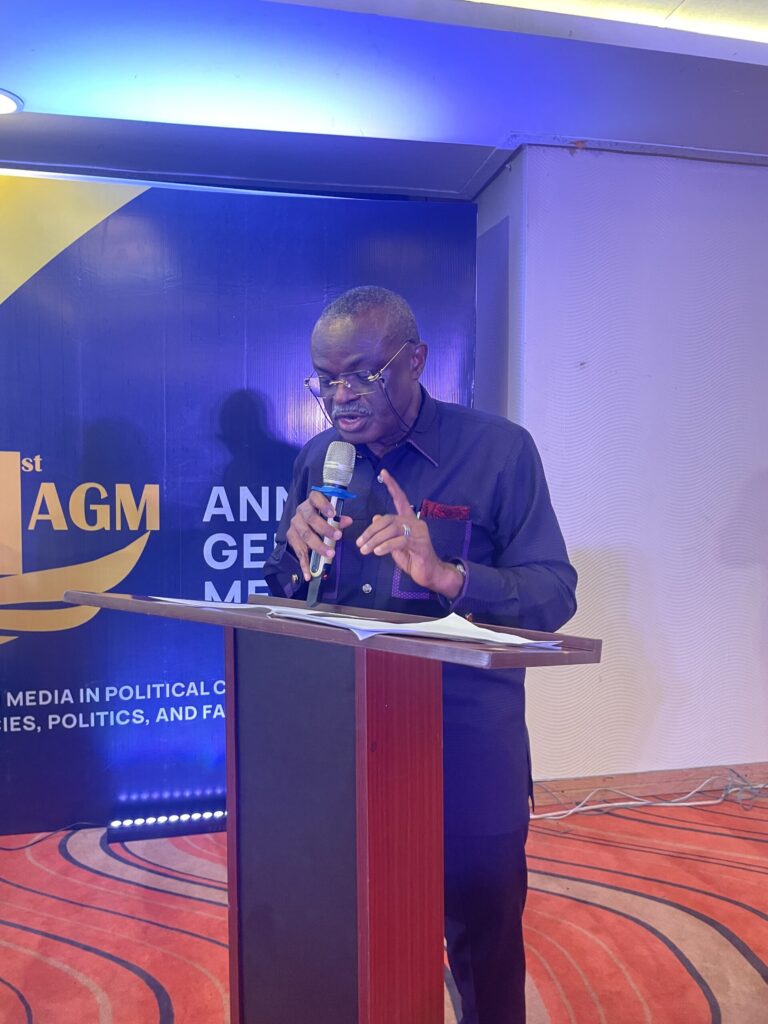
However, Ekechi’s keynote address delivered perhaps the sharpest diagnosis of the challenges facing Nigeria’s out of home media sector as election season approaches.
He argued that OOH media was far more than a supporting communications channel in Nigeria, particularly given the country’s political and social environment.
“OOH media cannot be classified as a support medium,” Ekechi declared. “It is not one of, but the leading medium of communication particularly in a chaotic political communication environment that is not deeply intellectual, historically analytic nor ideologically centred.”
He traced the roots of political outdoor advertising in Nigeria to 1963, when Chief Obafemi Awolowo and the Action Group pioneered modern political outdoor advertising through skywriting ahead of the 1964 elections.
Since then, he noted, the industry has expanded from conventional billboards to street furniture, transit media and digital outdoor displays. The medium’s influence, he said, was demonstrated by research showing that exposure to outdoor political advertising during the 2019 general elections reached as high as 94 per cent in some states.
Yet, according to Ekechi, the growing commercial value of political advertising must not become an excuse for abandoning professional standards.
“However, increased commercial opportunity should never come at the expense of professional ethics,” he said. “As messages compete for public attention, profit and integrity must go together.”
He called for stronger internal mechanisms governing media allocation, pricing, scheduling, documentation and contract administration, arguing that “the strongest industries are those that remain ethical even when commercial and extraneous pressures are at play”.
The veteran industry voice also raised concerns about what he described as regulatory inconsistencies, excessive permit charges, selective enforcement, vandalism of political advertisements and unpaid debts left behind after elections.
He particularly criticised what he called “exorbitant permit fees” imposed by some state signage agencies on political advertising, arguing that such charges could disproportionately disadvantage opposition parties.
He also alleged that outdoor media owners were sometimes left carrying substantial debts after elections, while their ability to pursue payment was weakened by fears of regulatory victimisation.
Ekechi further stated that Politicians and parties of ruling governments frequently leave outdoor media owners traumatised and blackmailed with heavy unpaid debts after elections conclude.
Vandalism, he added, remained another threat, with political supporters allegedly defacing, pulling down or burning rival campaign materials.
Beyond the immediate commercial implications, Ekechi warned that these practices could damage the foundations of fair political competition.
“Every democracy depends on fair competition,” he said. “Elections should be contests of ideas rather than contests of unequal access to communication channels.”
For him, access to advertising inventory must be governed by transparent commercial principles rather than political affiliation.
“Every qualified political party and candidate should have equal opportunity to purchase available advertising space, subject to existing laws and industry regulations,” he said, adding that selective enforcement “undermines both public confidence and the credibility of the industry”.
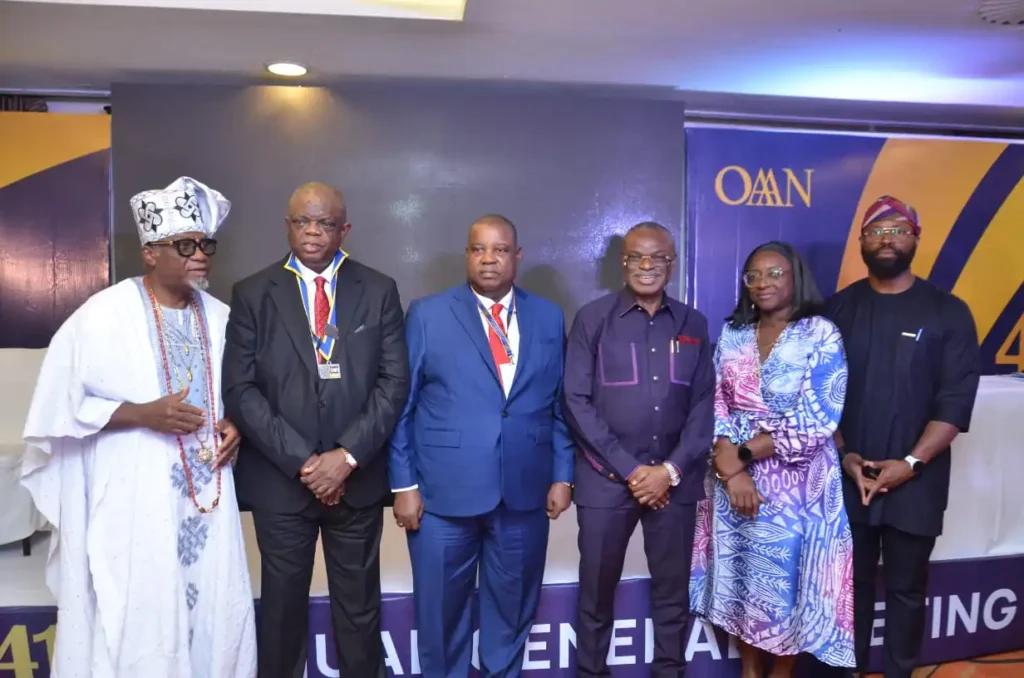
The call for consistency also found resonance in Akinsiku’s address, particularly his advocacy for the long-running campaign to secure chartered status for the OOH media profession.
He said the campaign was gaining support across relevant circles and expressed confidence that it would ultimately transform the sector.
“The darkness is rapidly giving way to daybreak, and we will soon, very soon arrive at the dawn of a new day, the beginning of a new, enviable era,” Akinsiku said.
He urged practitioners not to lose faith in the process, arguing that the proposed charter was ultimately about much more than the association’s leadership.
“In the end it is not about those of us that are privileged to be at the centre stage of the pursuit today. Rather, it is about the sanctity of the industry we serve,” he said.
“It is about the continued prosperity of our business… and, ultimately, it is in the best interest of the brands that are promoted on our platforms. They deserve to have enduring and effective visibility because we work for them.”
Ekechi similarly identified the proposed OAAN Charter as potentially transformative, saying it could alter the balance of power and strengthen the association’s ability to defend professional standards. But he cautioned that OAAN must first put its own house in order.
The association, he argued, should strengthen corporate governance, develop effective self-regulatory mechanisms and ensure equal access to advertising inventory for political contenders.
“Political neutrality is perhaps the greatest asset of any professional association,” Ekechi said. “Individual members are entitled to personal political beliefs, however, the Association itself must remain an impartial professional institution whose commitment is first and foremost to ethical standards, professional excellence, and national development.”
On the vulnerability of OAAN executives to regulatory pressure, he renewed an earlier call that “OAAN staff should be entrusted with executive powers so that they can indeed speak truth to power without fear of reprisal or victimising axe from regulators,” adding that “I have always doubted the extent an OAAN Chief executive or any other executive can engage a regulatory agency within the region of his company practice without prostrating for the fear of the obvious repercussion.”
He urged OAAN to “speak with one professional voice rather than many political voices”.
With the next electoral contest looming, the message from Abeokuta was unmistakable: political advertising may represent a lucrative opportunity for Nigeria’s out of home media industry, but the pursuit of profit cannot be allowed to eclipse fairness, professionalism and democratic responsibility.
As Ekechi put it in his closing appeal, “May OAAN continue to stand for professionalism over partisanship, ethics over expediency, fairness over favouritism, and national development over narrow commercial interests.”
For an industry whose platforms increasingly shape what Nigerians see, and therefore what they discuss and remember, the stakes are considerably higher than the price of a billboard.